Overview
Hair Loss After GLP-1 Weight Loss: Why It Happens and How to Prevent It
Hair Loss After GLP-1 Weight Loss: Why It Happens and How to Prevent It
 Written by the Nucore Health Clinical Team
Published on 03-17-2026
Written by the Nucore Health Clinical Team
Published on 03-17-2026
- Rapid weight reduction can trigger telogen effluvium
- The primary driver is metabolic stress from a sudden caloric deficit
- Low protein intake and micronutrient shifts increase risk
- The condition is temporary and self-limiting
- Hair density typically improves within 6–12 months
Overview
What’s Actually Causing Hair Loss?
Clinical data show that 30–50% of adults may experience telogen effluvium following significant physiologic stress, including rapid weight loss. Shedding usually begins 8–16 weeks after the trigger.
The primary mechanism is sudden metabolic stress. Rapid caloric reduction signals the body to conserve energy, shifting more hair follicles into the resting (telogen) phase.
Contributing factors may include reduced protein intake, iron deficiency, zinc insufficiency, vitamin B12 deficiency, and overall caloric restriction.
GLP-1 receptor agonists reduce appetite and energy intake. Evidence suggests shedding is secondary to weight loss and nutritional shifts rather than direct follicular toxicity.
Common Symptoms:
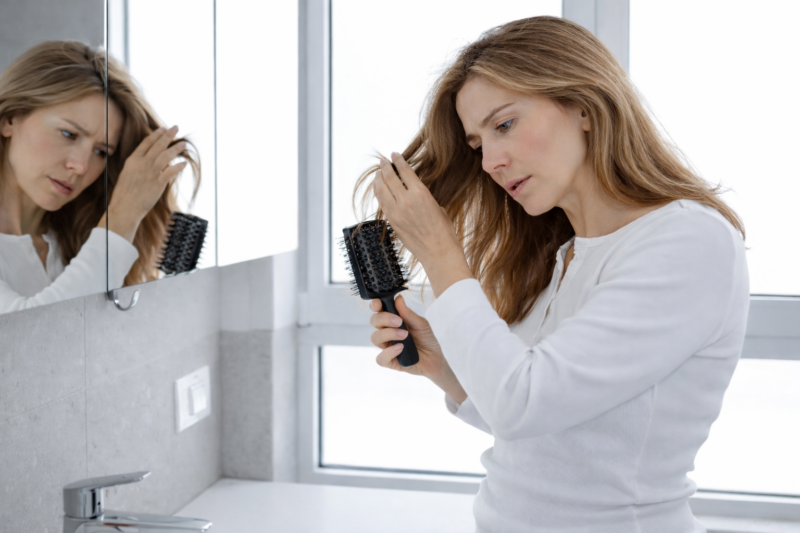
- Increased shedding in the shower or hairbrush
- Diffuse thinning rather than patchy loss
- Visible thinning at the crown or along the part line
- Hair appears less dense overall
What the Research Shows
Telogen effluvium is one of the most common causes of diffuse hair shedding following systemic stress. Rapid weight reduction is a recognized trigger due to abrupt changes in nutrient availability and metabolic demand. Reports involving GLP-1 receptor agonists describe observed hair thinning but do not support a primary medication-driven mechanism. Nutritional compromise and physiologic stress remain the more likely contributors. In most cases, shedding resolves once weight and nutrient status stabilize.
Labs We Recommend Checking:
Treatment & Management
- Nutritional Optimization: Maintain adequate protein intake, avoid aggressive caloric restriction, and correct identified micronutrient deficiencies.
- Medical Intervention: Topical minoxidil may be appropriate when telogen effluvium overlaps with androgen-related thinning. Finasteride may be considered when androgenetic hair loss is present.
- Supportive Hair Care: Use gentle, non-stripping shampoos; avoid excessive heat styling; limit chemical processing; and reduce mechanical tension.
Does Red Light Therapy Help?
Red light therapy may support follicular recovery in individuals with underlying androgen-related thinning. Correcting metabolic and nutritional triggers remains the primary intervention.
Duration & Recovery
Telogen effluvium is a temporary and self-limiting condition in which hair shedding peaks within three to four months, typically. Regrowth begins gradually, and overall hair density generally improves over six to twelve months. However, rapid weight loss may unmask underlying androgen-related thinning, which may require separate evaluation and management.
Sources
Medical Disclaimer
This content is for educational purposes only and is not intended to diagnose, treat, cure, or prevent any disease. Information provided should not replace medical advice from a qualified healthcare professional. Always consult your healthcare provider before making changes to medications, diet, or exercise routines.